
AIF vs. FIFPRO:
A New Era of Player Representation… or a Strategic Fragmentation?

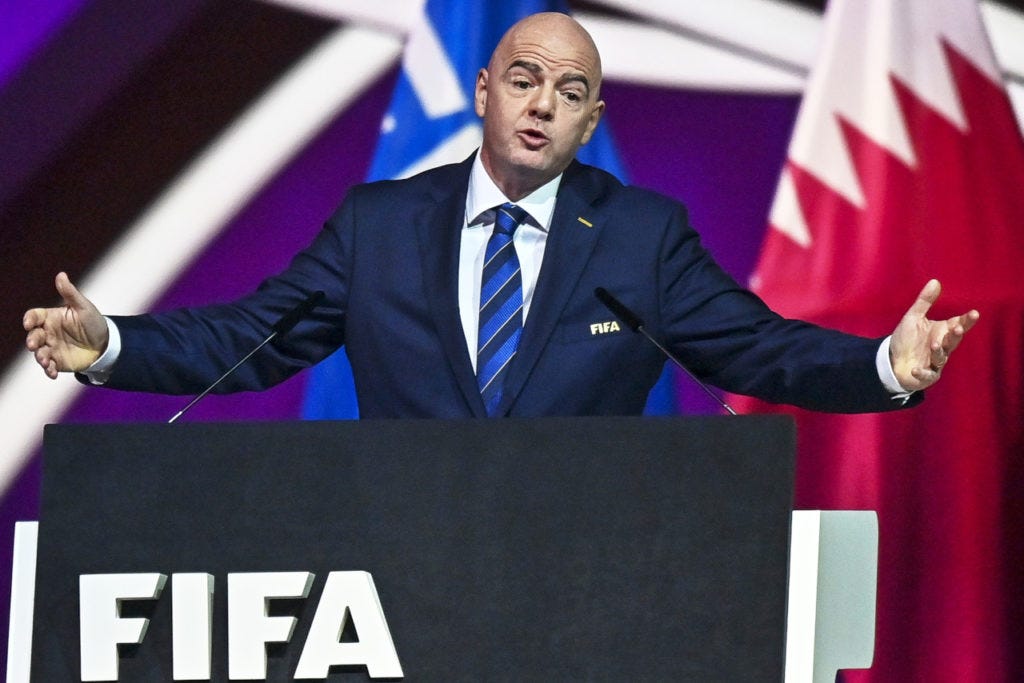
Gianni Infantino: current President of FIFA
The creation of the International Association of Footballers (AIF) opens a new chapter in the debate around a key question in global football: who truly has the legitimacy to speak on behalf of players?
To fully grasp the scale of this debate, it is also important to understand who FIFPRO is. Founded in Paris in 1965, FIFPRO has, over the decades, established itself as the international organization representing professional footballers through national unions. Today, it brings together more than 70 associations and represents tens of thousands of players worldwide, actively participating in key discussions on working conditions, the international match calendar, and the protection of players’ rights. It also operates with a significant financial structure.
The new organization (AIF) was unveiled last week in Madrid under the leadership of David Aganzo, president of the Asociación de Futbolistas Españoles (AFE) and former president of FIFPRO, alongside representatives from unions in Spain, Mexico, Brazil, and Switzerland.
According to its promoters, AIF is being created with the intention of representing more than 30,000 footballers and fostering more direct dialogue with governing bodies such as FIFA, UEFA, CONMEBOL, and CONCACAF.
Up to that point, there is nothing inherently problematic about the creation of a new international association. In principle, freedom of association is a fundamental element of any healthy democratic and labor system. The issue is not the existence of AIF itself, but rather the context in which it emerges, the timing of its appearance, and the potential political and institutional use it may come to serve.
FIFPRO reacted strongly. In an official statement, it argued that this new initiative lacks the fundamental legitimacy to represent professional footballers globally and suggested it is driven more by personal motives than by a genuine mandate from players around the world. FIFPRO also emphasized that its representation is grounded in more than 70 national associations and over 60,000 players, in addition to its recognition by institutions such as the European Union and the International Labour Organization.
The most delicate point is that this development comes amid an increasingly tense relationship between FIFA and FIFPRO.
In that same context, it has not gone unnoticed that David Aganzo was invited to a meeting organized by FIFA in Morocco last December, where, according to reports, a “consensus” was reached on several issues related to player welfare. This type of engagement raises important questions—among them, whether that “consensus” truly reflects the collective voice of players… or the construction of “new channels of dialogue” more closely aligned with governing bodies.
FIFPRO has publicly challenged the expansion of the international match calendar, the growing match load, and the lack of effective consultation with players. In fact, FIFPRO Europe and European Leagues filed a complaint before the European Commission against FIFA on matters related to governance and consultation regarding the international calendar.
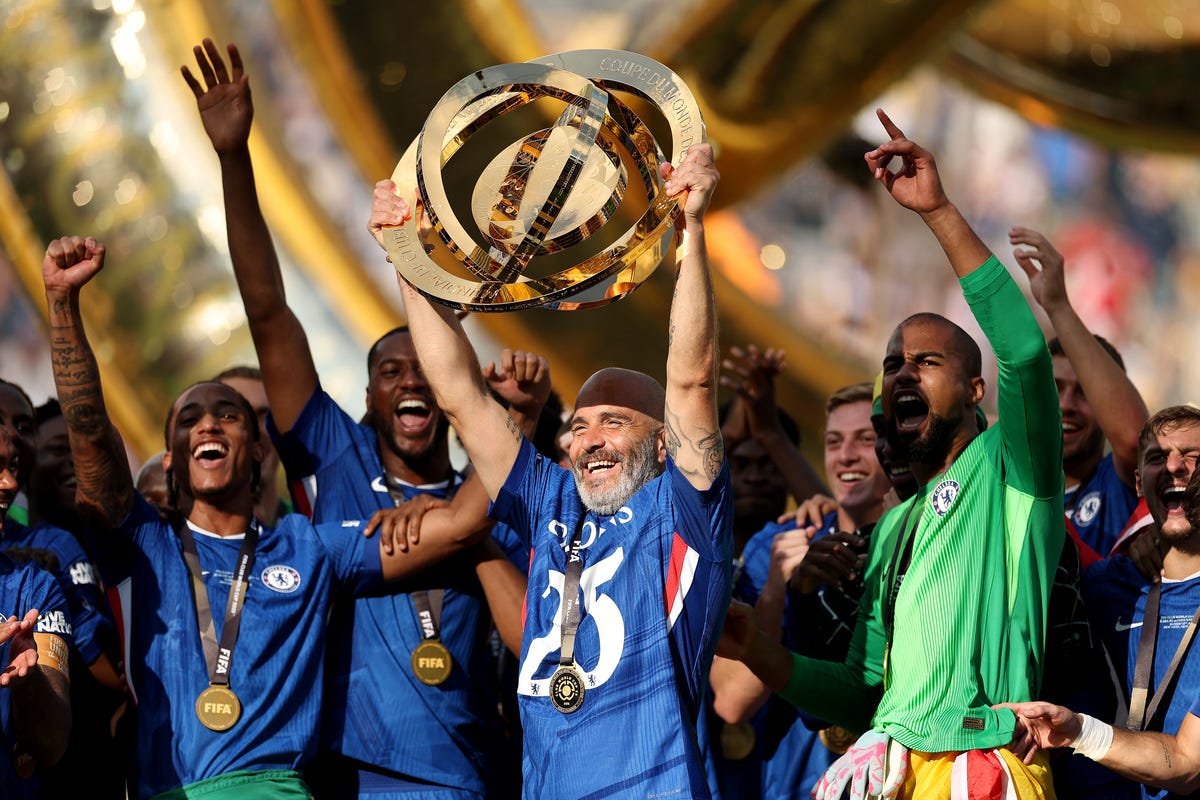
Enzo Maresca, head coach of Chelsea FC, lifts the FIFA Club World Cup trophy following his team’s victory in the 2025 final against Paris Saint-Germain, played at MetLife Stadium on July 13, 2025, in East Rutherford, New Jersey. (Photo: Buda Mendes/Getty Images)
For its part, FIFA has also escalated its stance against FIFPRO. In 2025, FIFA publicly called on FIFPRO to disclose its statutes, full financial reports, sources of income, and details regarding image rights and regional revenues, an institutional push framed under the principles of transparency and good governance.
In that context, the emergence of a new international players’ association opens the door to multiple interpretations.
The first is a positive one: more voices can mean broader representation. If AIF succeeds in building an independent, democratic, transparent structure that is genuinely connected to players, it could introduce healthy competition into football’s union ecosystem.
But the second interpretation is more complex: the rise of a new organization may also fragment player representation in a way that ultimately benefits other actors within the sports ecosystem, indirectly strengthening governing bodies. In sports-politics, fragmentation is rarely accidental; more often, it reflects a strategy that simply arrives wearing a “new uniform.”
The institutional risk for FIFPRO is evident. If FIFA or other bodies begin to recognize, consult, or promote dialogue with AIF as an “alternative representation” of players, FIFPRO could see its position weakened in negotiations over the international calendar, rest periods, player health, international competitions, guarantee funds, labor rights, and women’s football.
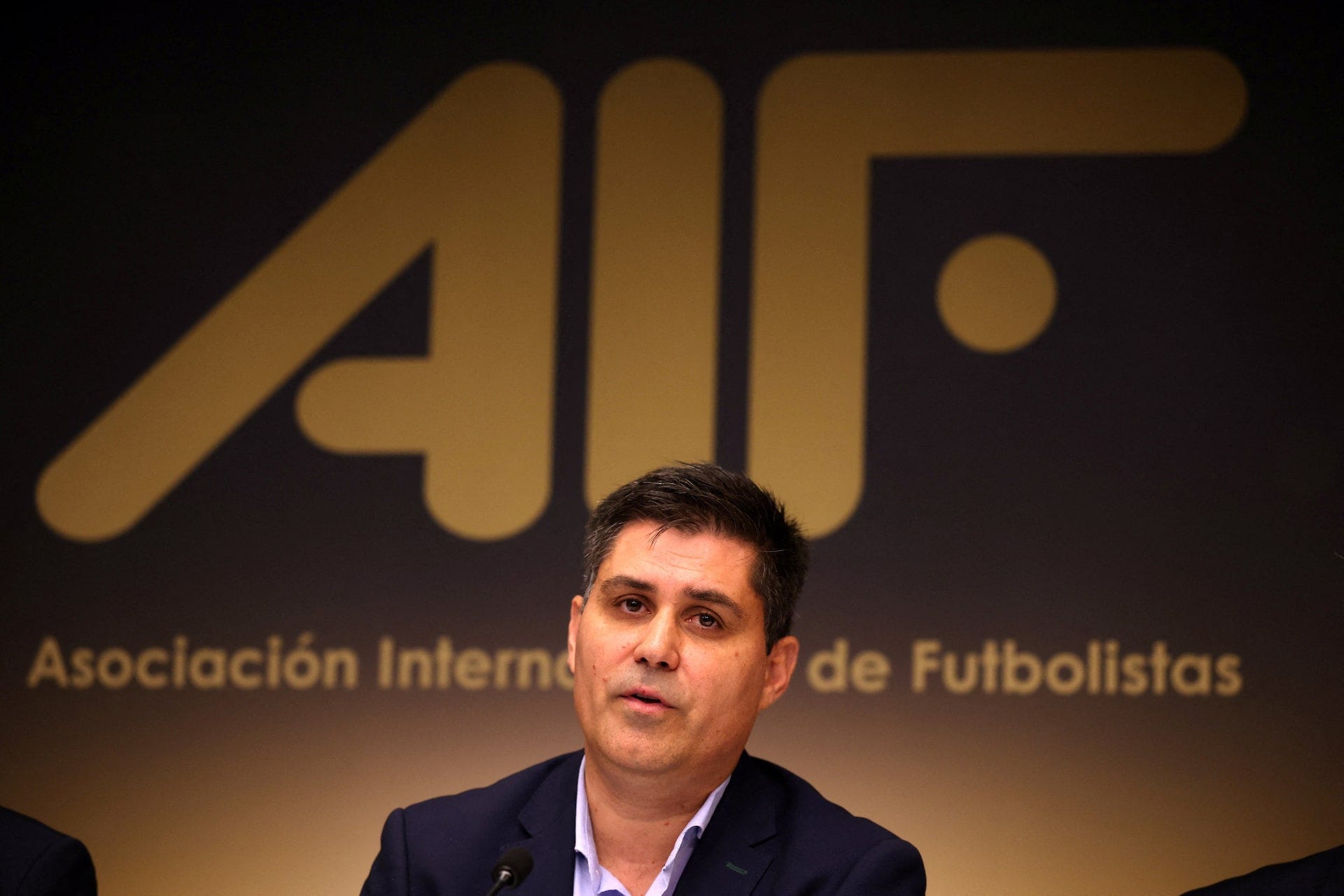
David Aganzo
David Aganzo has denied that the Asociación Internacional de Futbolistas (AIF) is an initiative backed by FIFA, while also defending the need for direct dialogue with FIFA. That distinction matters. Engaging in dialogue with FIFA is not the issue. The concern would arise if a players’ organization loses its critical distance from the regulatory power of global football.
The creation of AIF should not be interpreted merely as a personal dispute between leaders. It comes at a time when the voice of footballers is gaining significant global influence, increasing the strategic value of their representation. In that context, for governing bodies—particularly FIFA—it may prove advantageous to engage with counterparts that are more closely aligned with their strategic criteria, especially in the management and validation of decisions within the football ecosystem.
The immediate focus now shifts to the 76th FIFA Congress, set to take place tomorrow in Vancouver on April 30. David Aganzo has already indicated his intention to meet with Gianni Infantino to discuss AIF’s positioning and the current state of players’ rights within the global system.
At the same time, reports suggest that between 15 and 20 national unions are considering joining this new structure. This makes the coming months a potential turning point—one that will begin to define whether AIF can establish itself as a relevant actor in its own right… or whether FIFPRO will maintain its role as the primary reference in international player representation at a time when the calendar continues to expand, competitions multiply, and commercial interests advance faster than labor protection.
If you find this content valuable and would like to support this type of analysis, you can do so voluntarily by clicking HERE. (PayPal)
If you would like to receive exclusive content, quick updates on real cases, brief analyses, and practical resources on sports law and management, I invite you to join my 🟩WhatsApp Channel, where I share additional material that I don’t always publish on Substack.
You can also follow me on my social media platforms to access insights, news, and educational content that will help you better understand the sports ecosystem from a strategic and legal perspective.
DISCLAIMER
This article is for educational and informational purposes only. It does not constitute legal or any other type of advice; nor does it create an attorney-client and/or consultant-client relationship.
This is a great point - “there is nothing inherently problematic about the creation of a new international association. In principle, freedom of association is a fundamental element of any healthy democratic and labor system”… would be interesting to see the approach and reactions to a FIFA alternative.
Quite an insightful read!